Cümhuriyyət Günün Mübarək Azərbaycan!
Happy Republic Day Azerbaijan!
#28May #RespublikaGünü #HappyRepublicDay #Azerbaijan #ganjaeyc2016

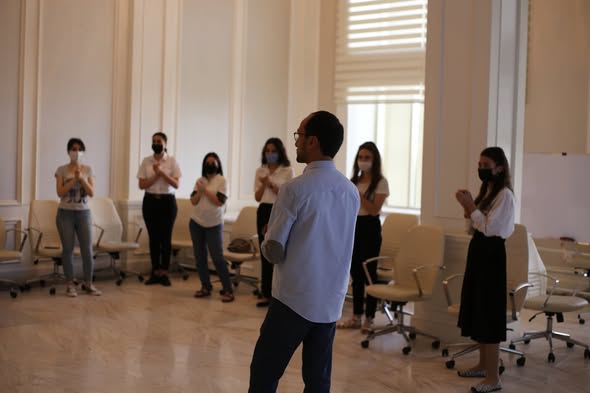
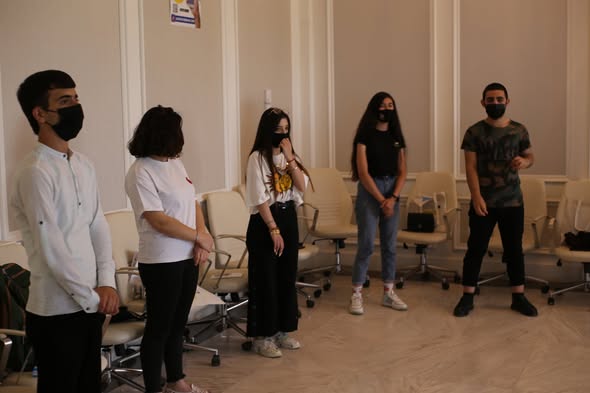
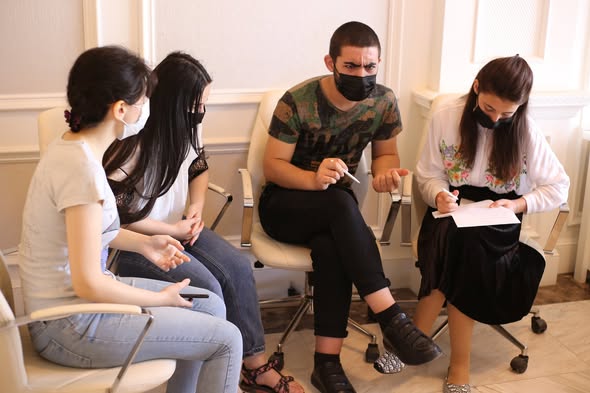
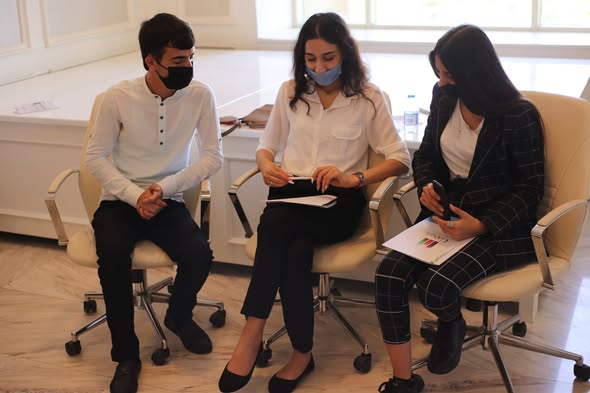
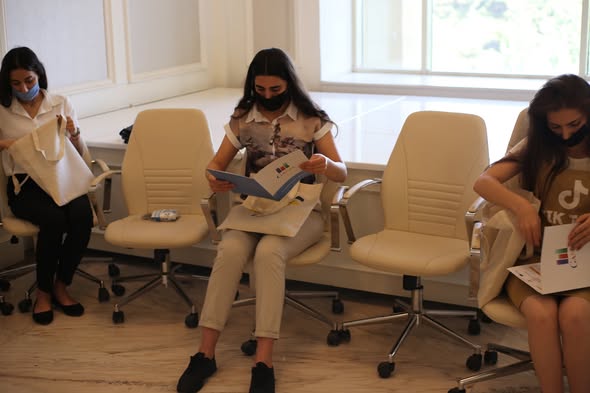
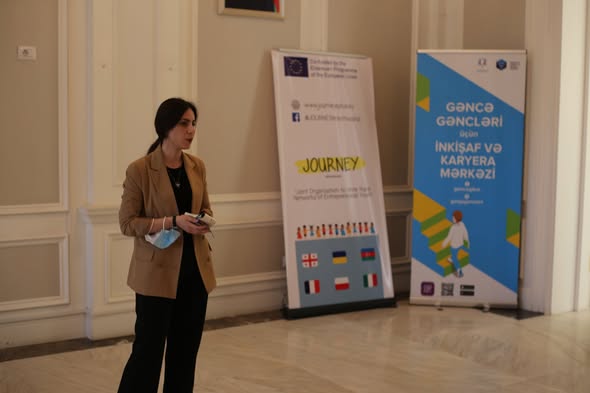
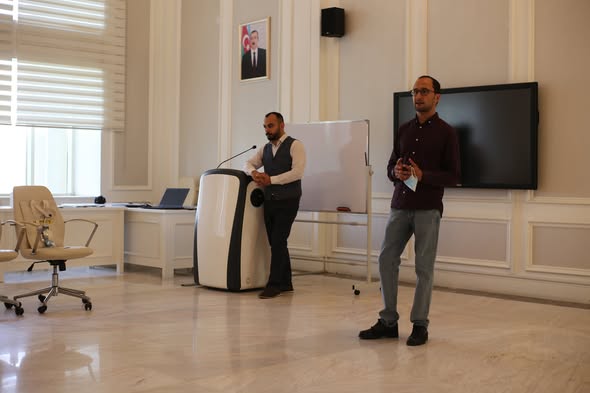
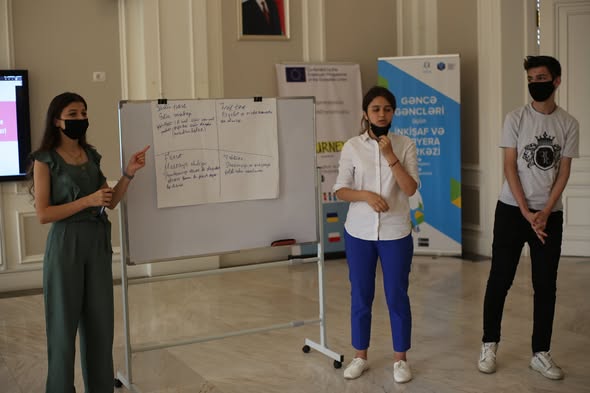
“Joint Organization to Unite Rural Networks of Entrepreneurial Youth – JOURNEY/erasmus+ (“Sahibkar Region Gəncləri Şəbəkəsinin Birləşdirilməsi Üçün Birgə Təşkilatçılıq”) layihəsi çərçivəsində 24-25 May tarixlərində Gəncə şəhərində “Gəncə Gənclərinin Sahibkarlıq Fəaliyyətinin Artırılması” təlimləri təşkil olundu.
Təlimlər zamanı gənclər “Sahibkarlıq”, “İstehlakçı davranışları”, “Marketinqdə mesaj Ötürmə”, “PEST və SWOT Analizi”, “Maliyyə Resursları”, “Rəqəmsal Marketinq və SMM”, “Biznes Model Canvas” və “Potensial investorlara biznes ideyanı necə təqdim edə bilərsiniz?” haqqında açar məlumatları əldə etdilər.
Hörmətli qonaqlarımız Milli Məclisin deputatı Müşfiq Cəfərova, Gəncə -Qazax İqtisadi Zonası üzrə KOB nümayəndəliyinin rəhbəri Anar Əliyevə və uğurlu sahibkar Babək Mehdiyevə xüsusi təşəkkürlər
Təlimlərdə iştirak edən hər kəsə təşəkkürlər!
On the frame of “Joint Organization to Unite Rural Networks of Entrepreneurial Youth – JOURNEY/erasmus+” with the partnership of “Ganja European Youth Capital 2016” Public Union, carried out entrepreneurial capacity building workshops for the young people of Ganja, on 24th and 25th of May.
The activities based on “Entrepreneurship”, “Consumer behavior”, “Messaging in Marketing”, “PEST and SWOT analysis”, “Business Model Canvas”, “Financial resources”, “Digital Marketing and SMM”, and “How to Pitch Business Idea”.
A big thanks to our distinguished guests the Deputy of National Assembly Müşfiq Cəfərov, Head of the SME Representation for Ganja-Qazakh Economic Zone Anar Aliyev and successful entrepreneur Babek Mehdiyev
Thank you to all of you for your participation!
#JOURNEY #journey_eplus #ganjaeyc2016 #capacitybuildingworkshops #Erasmusplus
Layihə: JOURNEY / Erasmus+ — «Sahibkar region gəncləri şəbəkəsinin birləşdirilməsi üçün birgə təşkilatçılıq» →
Qısaca olaraq bugünkü təlimlərdən
Briefly about today's workshops
#JOURNEY #journey_eplus #ganjaeyc2016 #capacitybuildingworkshops #Erasmusplus
Layihə: JOURNEY / Erasmus+ — «Sahibkar region gəncləri şəbəkəsinin birləşdirilməsi üçün birgə təşkilatçılıq» →
Dostlar müraciət üçün son 1 gün
!
“Gəncə Gənclərinin Sahibkarlıq Potensialının Artırılması" təlimlərinə iştirakçıların qəbulu davam edir
#JOURNEY #Erasmusplus #JOURNEY_eplus #ganjaeyc2016
Dostlar sizə xoş xəbərimiz var!
“Gəncə Avropa Gənclər Paytaxtı 2016" İctimai Birliyinin tərəfdaş olduğu JOURNEY/erasmus+ layihəsi çərçivəsində “Gəncə Gənclərinin Sahibkarlıq Potensialının Artırılması" Seminarları üçün iştirakçıların qəbulu elan olunur!
Təlimlər 24-25 May tarixlərində Heydər Əliyev Mərkəzində, təşkil olunacaq.
SON MÜRACİƏT TARİXİ : 23.05.2021
SAAT: 15:00
Qeydiyyat və ətraflı məlumat üçün:
https://cutt.ly/8bNtfqzRamazan Bayramınız Mübarək Əziz Dostlar!
Happy Ramadan Dear Friends!
#HappyRamadan #ganjaeyc2016
Dostlar uzun zamandır üzərində çalışdığımız #JOURNEY layihəsinin www.journeyeplus.eu saytı istifadəyə verildi
Sayt dörd dildə fəaliyyət göstərir (Azərbaycan, İngilis, Ukrayn, Gürcü). Arzuladığınız dili seçib iştirak edə bilərsiniz.
Qeydiyyatdan keçib, kursu uğurla başa vurub Erasmus+ sertifikatınızı əldə edə bilərsiniz
QEYD: Kurs ödənişsizdir.
Layihə: JOURNEY / Erasmus+ — «Sahibkar region gəncləri şəbəkəsinin birləşdirilməsi üçün birgə təşkilatçılıq» →
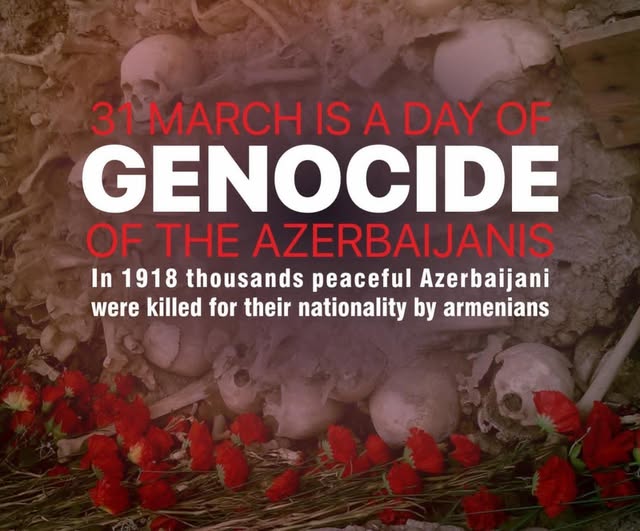
March 31 is marked as the Day of Genocide of the Azerbaijanis.
After the Republic of Azerbaijan regained its independence, it has become possible to renew the objective picture of the past history of Azerbaijani people. The truth which for many years was kept back, is getting disclosed and misinterpreted events are getting their real value.
Numerous acts of genocide against Azerbaijani people, which for many years did not receive its deserved political and legal assessment, is one of the secret pages of the country's history.
The Gulustan and Turkmenchay agreements signed in 1813 and 1828 provided the legal ground for the partition of the nation of Azerbaijan and division of its historical lands. The occupation of the lands continued the national tragedy of Azerbaijan people. Within a short time, gross settlement of Armenians in the territories of Azerbaijan has begun. The occupation of Azerbaijani territories became an integral part of the genocide.
Armenians moved to Yerevan, Nakhchivan and Karabakh khanates have achieved to establish their administrative territorial unit of Armenian region despite their minority as compared to Azerbaijanis residing in the same area. This artificial division provided political reasons for the removal and annihilation of Azerbaijanis in their native lands. This was followed by propaganda of the establishment of the Great Armenia. In order to ensure the exculpation of the idea to establish this fictitious state in the territory of Azerbaijan, a wide-scale programme, aimed at the falsification of the national history of Armenians, was started. The distortion of the history of Azerbaijan and the whole Caucasus, formed an integral part of this programme.
Inspired by the idea of the establishment of the Great Armenia, Armenian invaders started to openly implement on a wide scale their evil actions against the nation of Azerbaijan during 1905-1907. Armenians started their brutal acts in Baku and further spread them through the rest of Azerbaijan and Azerbaijani villages in the current territory of Armenia. Hundreds of settlements were razed to the ground and thousands of Azerbaijanis were savagely killed. The organizers of these events were creating an unfavorable image about the people of Azerbaijan to hide the truth and prevent these events from a correct political and legal evaluation.
Armenians got use of the World War I, Russian revolutions in February and October of 1917, and managed to accomplish their ideas under the plea of the Bolshevism. The implementation of a cruel plan of cleansing the population of Azerbaijan in the provinces started by the Baku commune under the plea of fighting against counter-revolutionary elements in March of 1918. Armenian crimes have secured themselves an everlasting place in the memory of Azeri people. Thousands of Azerbaijani civilians, were murdered for the only reason of their belonging to the nation of Azerbaijan. Armenians destroyed dwelling houses and burnt people alive. Most of Baku was turned into ruins with national architectural sights, schools, hospitals, mosques and other monuments destroyed.
Genocide of Azerbaijanis was particularly cruel in Baku, Shamakha, Guba, Karabakh, Zangezur, Nakhchivan, Lenkaran and other regions. Many civilians in those areas were killed, the villages were brought to ashes and national monuments were razed to the ground.
After the establishment of the Azerbaijan National Republic, closest attention was paid to the March 1918 events. The Council of Ministers issued a decree on July 15th 1918, to establish an extraordinary committee for the investigation of those tragic events. The committee investigated the first stage of the March genocide; the brutal acts in Shemakha and the cruel crimes in the territory of Yerevan province. A special department was established under the Ministry of Foreign Affairs to notify the community about the truth. The Azernaijan National Republic declared March 31st as a mourning day for two times - in 1919 and 1920. It was the first attempt in the history to give a political assessment to genocide against the people of Azerbaijan and to the aggressive process which continued for over a century. But the collapse of the Azerbaijan National Republic did not allow to finish this process.
In 1920, Armenians got use of the coming of the Soviet power into the South Caucasus, and declared the annexation of Zangezur and other regions of Azerbaijan to the Armenian Soviet Republic.
Armenians later started to utilize newer means to strengthen their policy, aimed at the deportation of Azerbaijani people from these territories. For this purpose, Armenians got use of the 23 December 1947 decree of the Soviet Council of Ministers "On removal of collective farmers and other Azerbaijani population from the Armenian Soviet Republic to the Kura-Araz lowlands of the Azerbaijan Soviet Republic". During 1948-1953, they finally achieved the purpose of mass deportation of Azerbajanis from their historical land, at the state level.
At the beginning of the 50th Armenians nationalists with the help of their defenders began to conduct a cruel aggressive campaign against the nation of Azerbaijan. In regular published books, magazines and newspapers in the territory of the former Soviet Union there were made the attempts to prove the belonging of Azerbaijan national culture, classic heritage and architectural monuments to Armenians. At the same time Armenians strengthened their efforts to create a negative image about Azerbaijan people worldwide. In order to create the image of "a long-suffering oppressed Armenia nation" Armenians deliberately distorted the events which took part in this region in the beginning of the century. They called themselves the victims of the genocide, which they in reality conducted against Azerbaijan people.
Persecution of Azerbaijanis in the territory of Yerevan, where the main population were Azerbaijanians and from the other parts of Armenia SSR led to their mass proscription. Armenians roughly violated the rights of Azerbaijan people, created the obstacles to get the education in native language and exerted a strong pressure ipon them. The historical names of Azerbaijani villages were changed within a previously unforeseen process in the history of toponymy, when ancient names were replaced with the modern ones.
The trumped-up Armenian history was raised at the state political level in order to bring up younger generations of Armenians in the spirit of chauvinism. Brought up in the manner of Azerbaijan literature and culture, which served to great humanism ideals, the young generation of Azerbaijanis stayed helpless before Armenia's extremist ideology.
The claims against the Azeri national spirit, honor and dignity, created an ideological platform for the political and military aggression. The Azerbaijan genocide, which was not given a correct political and legal evaluation, led to distortion of historical facts in the Soviet media and misleading of the communities by Armenians. The leadership of Azerbaijan did not pay the sufficient attention to anti-Azerbaijan propaganda, which raised and intensified among the soviet regime in mid-80s.
The deportation of hundreds of thousands of Azerbaijanis from their historical lands at the first stage of the Nagorny Karabakh conflict in 1988, also did not receive a correct political assessment in Azerbaijan. The autonomous republic of Nagorny Karabakh was taken from Azerbaijan's control and annexed to the Armenian SSR at the basis of an unconstitutional decree of Armenian Republic and under assistance of the Moscow-led Special Administration Committee. This fact caused a serious dissatisfaction among the nation of Azerbaijan and forced it to begin important political activities. Even though the aggressive policy aimed at the occupation of the territories of Azerbaijan, was strongly criticized at numerous rallies held in Azerbaijan, the political leadership still did not give up its passive and contemplative position. In January of 1990, Soviet troops were brought to Baku in order to prevent further development of the national liberation movement. Hundreds of Azerbaijani were killed and injured, as the result.
In February of 1992, Armenians accomplished unforeseen brutalities among the population of Hojali. The Hojali genocide saw thousands of Azerbaijan people murdered and taken prisoners of war. Hojali was razed to the ground.
The adventurous policy of Armenian nationalists and separatists in Nagorny Karabakh, forced from their homelands over one million of Azerbaijan nationals, who now have to live in tent camps.
Roughly 20 percent of Azerbaijani territory was occupied by Armenian armed forces, thousands of Azerbaijani citizens became martyrs and injured .
The tragedies which took place in Azerbaijan in the XIX-XX centuries and resulted in occupation of Azerbaijan lands, formed the consecutive stages of Armenia's purposeful policy against the Azerbaijanis. Efforts were made to give a political assessment to only one of those events - the March 1918 massacre. The successor of the Azerbaijan National Republic - the Republic of Azerbaijan - considers it a historical duty to ensure a logical continuation to unfulfilled political decrees and political evaluation to the genocide.
#31march #31march1918 #31marchgenocide #103year
Novruz milli birlik rəmzi, bolluğun, bərəkətin, xeyirxahlığın təcəssümü, sülh, əmin-amanlıq və dostluq bayramıdır. Novruz Bayramınız Mübarək!
Wishing Novruz to bring health, peace, abundance and prosperity to the whole world, Happy Novruz!
#NovruzBayramınızMübarək #HappyNovruz #Azerbaijan #ganjaeyc2016
On the frame of the “Joint Organization to Unite Rural Networks of Entrepreneurial Youth – JOURNEY/erasmus+" project 3 days Capacity Building Worksops have been implemented through use of the ZOOM Meeting Tool with youth from Ganjabasar region of Azerbaijan.
We warmly thank to our partner organizations: ALDA (Association of Local Democracy Agencies) from France, Fundacja Zaufania Społecznego PUBLICA FIDES from Poland and FORMA.Azione Giove In Formatica from Italy, for this really interesting Capacity Building Workshops!
And thanks to our youngsters for their participation!
#JOURNEY #ganjaeyc2016 #entrepreneurship
Happy “Ilakhir Charshanba”!
The last four Tuesdays of winter (usually starts from the last Tuesday of February) before Novruz are celebrated in Azerbaijan and called as “Charshanba”. According to Azerbaijani traditions, “Charshanbas” indicates the end of winter and start of spring. According to the folk belief, the first Charshanba represents water and celebrates its purifying nature.
The second Charshanba relates to the element of fire. It is believed that the action of jumping over bonfires and lighting candles renews a person and purges them of illness, allowing them to start the spring with positivity.
The third Charshanba in Azerbaijani tradition represents wind, which brings the beginning of spring on the air. In some western regions of Azerbaijan, the people call this day as Black Wednesday. Azerbaijanis are supposed to visit and restore the graves of their relatives.
The fourth and last Charshanba represents earth, known as “Torpag Chershenbesi” or “Ilakhir Charshanba”. It is believed that on this day nature revives again. Azerbaijanis consider this Charshanba as the most important among the four and hold special traditions related to this day. For example, there should be seven varieties of food on the table and all of their names must start with letter 's' in Azerbaijani, such as sumakh (a kind of spice), sud (milk), sirke (vinegar), samani (prepared from wheat), and so on. Folk tales say that in the evening of the fourth Charshanba, it is possible for young girls to see their future husbands by approaching to a mirror with a candle in their hands. Children knock at the doors of neighbouring houses and leave their hats or bags, hoping for candies and desserts that are specially prepared for the holiday such as shakarbura and pakhlava.
#Novruz #IlakhirCharshanba #NovruzHoliday #HappyNovruz
#ganjaeyc2016 #Azerbaijan
Being a woman itself is a superpower. Celebrate that!
Happy Women`s Day to all the incredible women!
#WomensDay #8March #ganjaeyc2016
We Remember! We demand justice for innocent victims of Khojaly genocide!
#JusticeForKhojaly #Khojaly1992 #26February